Local government reorganisation – an interview with Linda Norman
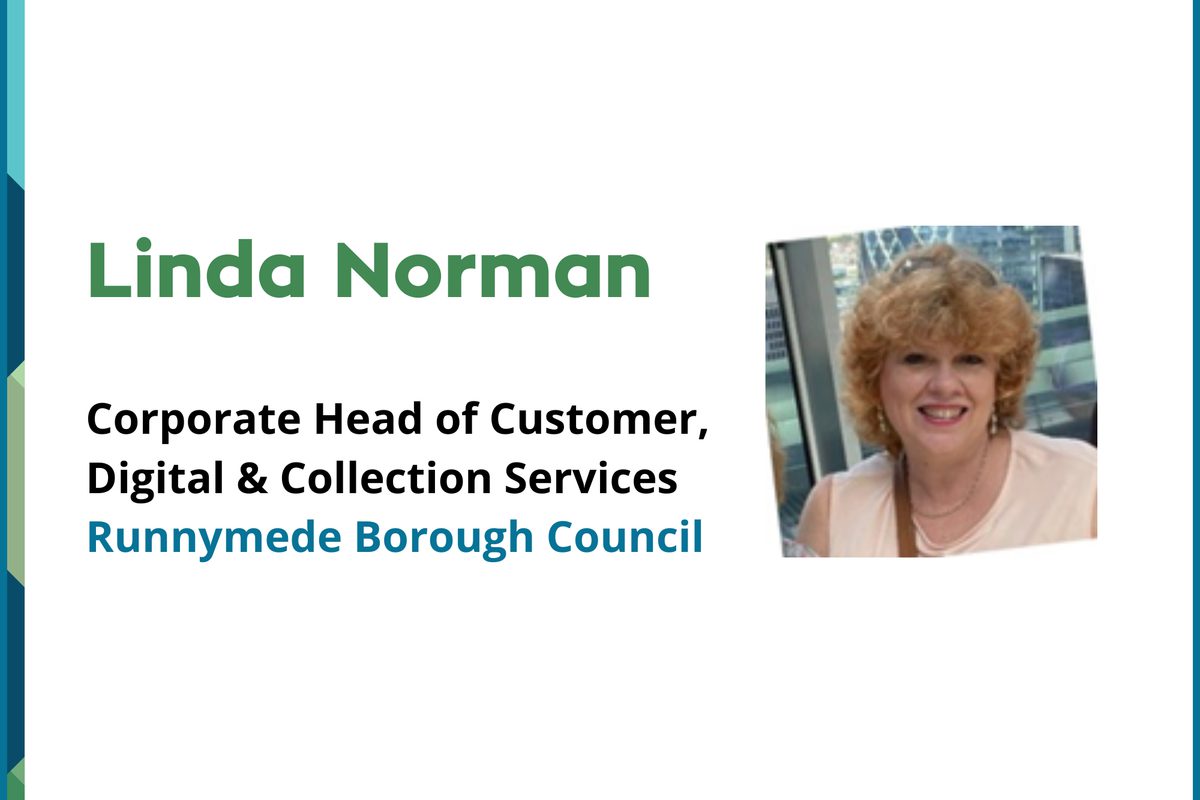
We recently caught up with Linda Norman, Corporate Head of Customer, Digital & Collection Services at Runnymede Borough Council, to talk about local government reorganisation (LGR) in Surrey.
Surrey is splitting into two unitary authorities, with West Surrey covering Runnymede, Spelthorne, Woking, Guildford, Waverley and Surrey Heath, with implementation set for April 2027.
What challenges are you expecting with the move to being a unitary authority?
The move to a unitary authority in Surrey is one of the biggest changes I’ve seen in my career. We’re set to become the third largest unitary authority in the country, with a population of 657,000.
The scale is daunting—dissolving districts and boroughs, appointing statutory officers and setting up new governance structures.
Staff morale is a significant concern. Since the announcement, I’ve seen younger staff leave for existing unitaries and older colleagues choose retirement rather than face the workload ahead.
The uncertainty is unsettling and maintaining business as usual during this period of flux is a real challenge. With teams stretched thin by requests for information, data migration and the need to keep services running, I worry that core functions like collection rates could suffer.
How are you preparing for those challenges?
West Surrey councils have appointed a voluntary joint committee and a county-wide project management office (PMO) has also been established. We have not brought in any of the Big 4 consultancies and are going to be managing the LGR ourselves. Digital transformation and revenues and benefits are likely to be early priorities.
My approach is both technical and people focused. On the technical side, we’re prioritising data cleansing and archiving so that only relevant, accurate data is migrated to new systems. I’m reviewing IT specifications, contracts and procurement processes to ensure we can leverage economies of scale and invest in modern, efficient systems.
For my teams, I’m committed to open communication. I attend team meetings every six weeks to share updates and answer questions directly. I encourage staff to pursue qualifications and training and we’ve updated all job descriptions so we can compare roles and grades on a like-for-like basis across all the six local authorities coming together.
Digital transformation is central to our strategy—we’re maximising existing technology, running pilots like text reminders for council tax and upskilling staff so we’re ready for the future.
What savings are you forecasting to make over the next 5 to 10 years?
The financial imperative is clear: we have to save billions over the next decade. Savings will come from senior management restructures, rationalising the number of councillors and streamlining systems, processes and staff. At Runnymede, we still have £3.9 million in savings to achieve before April 2027, with annual targets set.
Once systems are aligned and processes rationalised, I expect the new authority to operate more efficiently and at a lower cost.
As unitary authorities retain all the revenue they collect, this will bring significant change.
Which bodies are you speaking to for support?
We’re drawing on the expertise of several sector bodies. The District Councils Network provides regular updates and has been a key resource for our chief executives.
The Local Government Association (LGA) has conducted peer challenges, offering valuable external scrutiny.
I’m also interested in the work of CIVEA, especially around enforcement and breaking down stereotypes about enforcement agents.
What have you learned from Buckinghamshire?
We’re learning from Buckinghamshire’s experience, as they have already been through this process. They recently completed system migrations and restructured their revenues and benefits teams following their transition. In addition, they carried out a full single person discount postal review, which required significant internal effort. Their approach highlights the importance of balancing operational demands with staff and resident experience, and demonstrates the benefits.
What positive impacts do you see coming out of this for the council and for residents?
I believe residents will see more efficient services, less waste and eventually potentially lower council tax. Harmonising fees, charges and service delivery will bring clarity and consistency, while a single point of contact will simplify interactions with the council, as will the removal of a lack of knowledge about who is responsible for which services under the current system.
Our digital inclusion initiatives, like “tech and tea” sessions, are helping residents—especially the elderly—become more comfortable with technology. Ultimately, I hope the new authority will deliver a more joined-up, responsive service to the community.
What are the potential knock-on effects?
The knock-on effects are wide-ranging. As we realise efficiencies, there will be more investment in discretionary services. However, maintaining these services in a financially constrained environment will be a challenge, as statutory services often take precedence.
There might well be redundancies at the top, but I think it unlikely there will be any lower down the organisation.
What impact will it have on collections and enforcement?
Collections and enforcement will face disruption, especially in the early years. With staff stretched and systems in transition, maintaining high collection rates will be tough. Collection rates for the first year will be really important.
We’ll need to coordinate new billing systems and enforcement agent contracts across the merging authorities, which will require careful planning.
What impact will there be on teams to retain knowledge and experience?
Retaining knowledge and experience is a top priority, but it’s not easy. Staff turnover, especially among those uncertain about their future roles, poses a risk to organisational memory.
I’m focused on upskilling staff, encouraging professional development and creating opportunities for team members to showcase their expertise. By valuing and investing in people, I hope we’ll retain the talent and experience needed for success.
Overall, how do you feel about the move to a unitary authority?
For me, these are exciting times. It might be a bit daunting, but it’s the right thing to do. I think the next few years will pass very quickly!
Related content

The potential impact of the Wales consultation on council tax enforcement
Read More